
Fire Hydrant Repair in Alabama: Close the Deficiency List
By Jason White, Owner · · 4 min read
A hydrant inspection report comes back with several problems. Someone forwards it to the water system. A repair request is discussed at the next meeting. A month later, nobody can tell which items are still open.
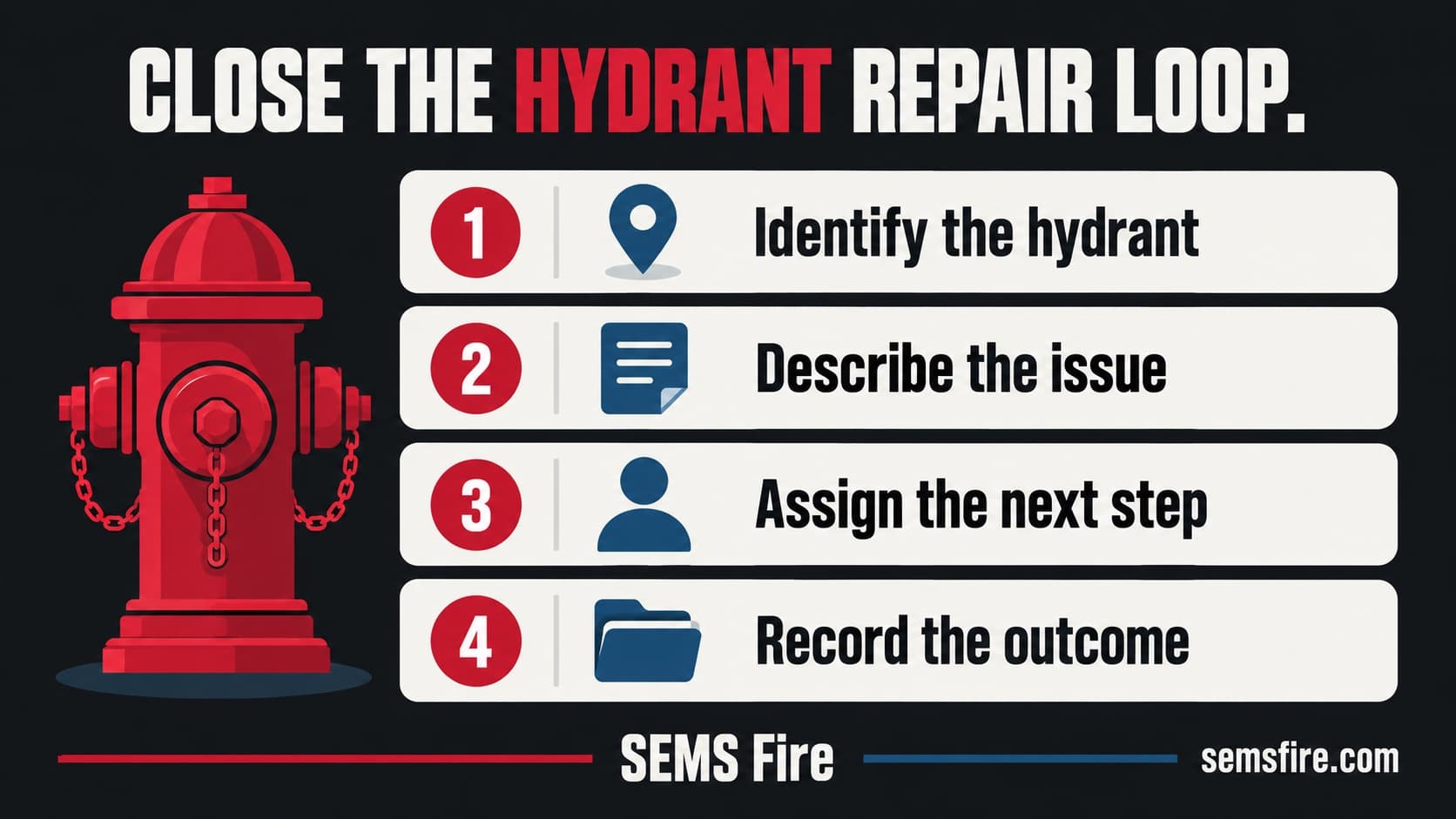
The missing piece is often the handoff between finding a problem and recording what happened next. For an Alabama department or water system arranging fire hydrant repair, a useful deficiency list should answer four questions: which hydrant, what was observed, who owns the next step, and what evidence closes the item.
This guide is about that handoff. Technical assessment, repair methods and decisions about a hydrant's availability belong with the responsible system operator and qualified service personnel.
Give every issue an exact location
“Hydrant near the school” may be enough for the person who wrote the note. It may mean three different hydrants to the next person who reads it.
Start the request with the asset identifier used by the hydrant owner. Add its mapped location and a recognizable landmark. If the identifier on the report differs from the one in the utility's records, resolve that difference before creating another asset entry.
Photographs can help document a visible concern, but they should support the asset record rather than replace it. Label each photograph with the same identifier. Avoid sending a folder of unnamed images and expecting the repair coordinator to match them to street descriptions.
If the report covers several hydrants, keep one line for each asset and separate issues beneath it. That makes it possible to close one repair while leaving another item open.
Describe the observation without guessing the cause
A service request is more useful when it separates what someone saw from what they think caused it. Record the date, the observation and the source of that observation: a service report, an operator's note or a photograph taken from a safe location.
For example, a note can identify visible damage and reference the photograph without naming an internal component as the cause. A qualified assessment can establish the repair scope later. An early guess copied into every email can make it harder to see that the original issue remains unconfirmed.
Include the original report with its wording intact. If you need clarification, ask the report's author to explain the finding rather than rewriting it into a different technical conclusion.
Urgent availability concerns should follow the hydrant owner's established notification process immediately. An ordinary quote request or spreadsheet update is not a substitute for that process.
Assign the next action to a person
The fire department, water utility and property owner may have different responsibilities. Before requesting work, confirm who owns the asset, who may authorize the service and who needs the outcome.
A practical follow-up list can use these fields:
- Asset ID and location.
- Finding and date reported.
- Responsible contact and organization.
- Next action, such as assessment, quotation or authorized repair.
- Target follow-up date and current status.
- Link to the final service record.
Use status descriptions that explain what is happening. “Awaiting assessment” and “repair authorized” convey different information. A single “in progress” label hides that distinction and leaves the next person calling around for an update.
Make the repair request easy to scope
Before a provider can confirm the visit, they need enough context to understand the job. Supply the asset list, available manufacturer or model information, original findings and the responsible system contact. Note access restrictions and any coordination the owner requires.
Ask what the proposed work includes, what still needs assessment and how additional findings will be handled. Confirm who can approve a revised scope. This is particularly useful when several hydrants are grouped into one request and each has a different issue.
For background on the wider service scope, see SEMS's hydrant services. When contacting the office about repair, describe the specific problem so the team can confirm the appropriate next step and service availability.
Close the item with a record
An invoice and a closed deficiency are different records. Keep the completed service documentation against the asset and note whether any further work or confirmation remains outstanding.
Before marking an item closed, ask whether the documentation identifies the original issue, work completed, remaining findings and responsible party's next steps. Do not change an asset's operational status simply because a payment was made or a technician visited. Follow the owner's process for that decision.
Retaining this trail gives the next officer or maintenance coordinator something better than a forwarded email chain. They can see the problem, the authorized action and the documented outcome without reconstructing the history.
Start with the open items you already have
You do not need a new software system to improve the handoff. Start with the latest deficiency list, assign an owner to each open item and attach the supporting records. The immediate benefit is fewer unanswered questions when someone asks what still needs attention.
To discuss a hydrant service request with SEMS, send the office a message with your organization, location, asset count and a brief description of the open issues. The team can review the scope with you and confirm how to proceed.
Related service: Hydrant GPS Mapping, Maintenance, Flow Testing & Painting