
Hydrant Paint and Flow Records: Resolve a Color Mismatch Before Repainting
By SEMS Fire · · 6 min read
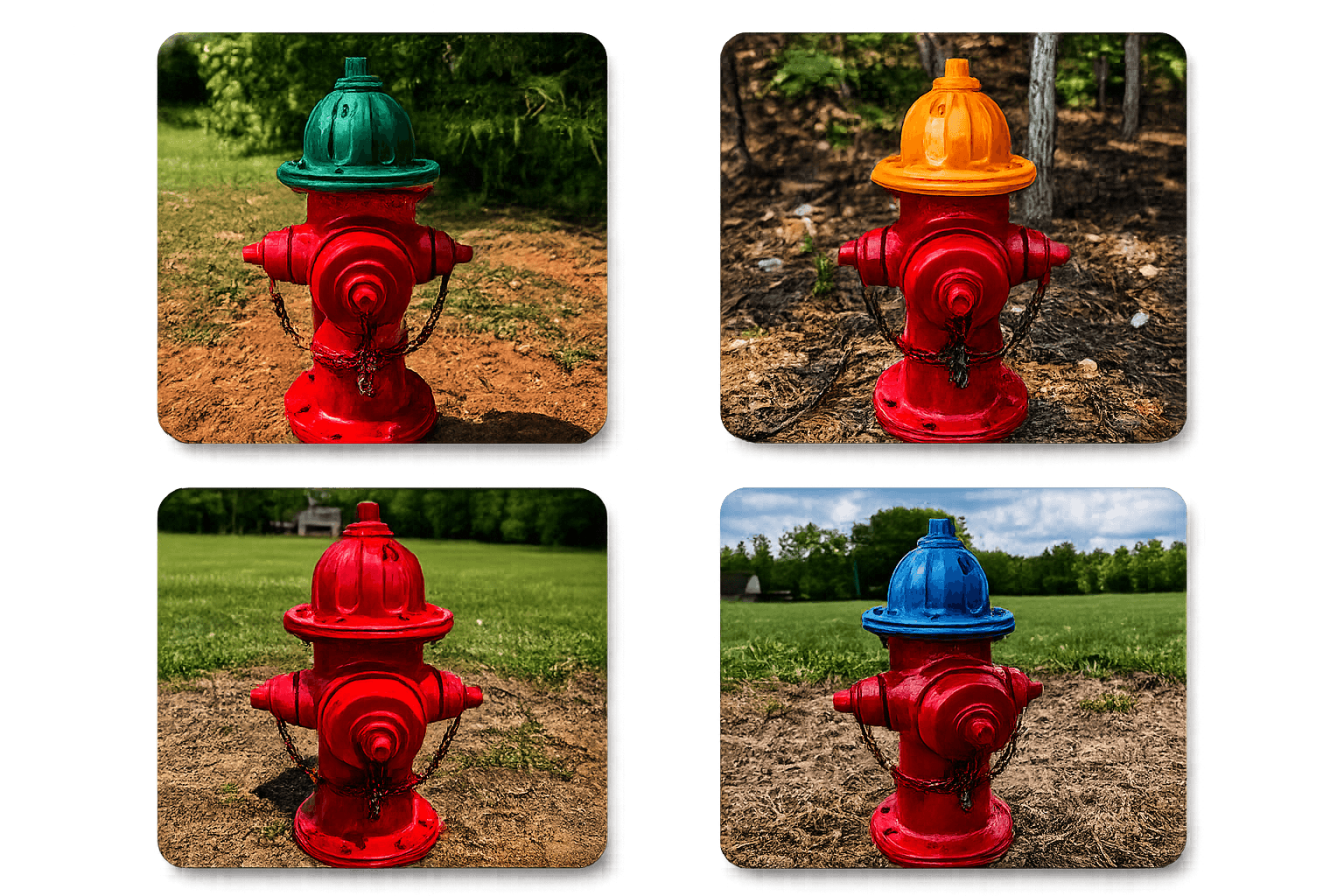
A hydrant painted to a consistent color code gives an arriving engine company useful information before anyone opens a cap: the capacity classification assigned from its recorded flow test, where that local marking scheme is used. It is not a guarantee of the water available at a later incident. A hydrant painted without a test behind it gives the crew a guess dressed up as data.
This guide explains the color scheme many departments and water systems reference, what has to happen before a hydrant earns its color, and how to keep the coding accurate over time.
Quick answer: what the colors mean
NFPA 291 is a recommended practice for water flow testing and marking of hydrants. Public summaries of that recommended practice, such as the University of Tennessee MTAS guidance on marking fire hydrants, describe a common classification of public hydrants by rated capacity at 20 psi residual pressure, with matching colors for the bonnet (top) and nozzle caps (MTAS: Marking All Fire Hydrants):
| Class | Bonnet and cap color | Rated capacity at 20 psi residual | | --- | --- | --- | | AA | Blue | 1,500 gpm or more | | A | Green | 1,000 to 1,499 gpm | | B | Orange | 500 to 999 gpm | | C | Red | Less than 500 gpm |
The same public summaries commonly note chrome yellow barrels for public hydrants unless the jurisdiction has already adopted another color, reflective paint on capacity colors for night visibility, and a different body color for private hydrants so crews can tell them apart.
NFPA 291 is a recommended practice, not automatically local law. Your water system or local authority decides which scheme is used, and which edition it follows. Confirm the adopted scheme and current edition text with your AHJ before repainting anything. Use the applicable standard itself for the complete requirements.
A color is only as good as the flow test behind it
The class is meant to come from a flow test tied to that hydrant, rated at 20 psi residual. Painting by appearance, main size or neighborhood age skips the step that makes the color trustworthy.
A practical rule for your records: every painted class should point back to a dated test result for that specific hydrant. If you cannot find the test, treat the color as unverified until the hydrant is tested again.
SEMS performs hydrant program work that includes mapping, flow testing, maintenance and painting. Our hydrant GPS mapping, flow testing and painting program overview explains how those pieces fit together. For Alabama service-record context, see hydrant maintenance service records.
A reconciliation worksheet for colors that do not agree
Use a comparison table before issuing a paint scope. This is an administrative aid, not a flow-test calculation or an instruction to operate a hydrant.
| Hydrant ID | Observed bonnet/cap color | Dated test reference | Recorded rated capacity/class | Locally approved marking | Open discrepancy and owner | | --- | --- | --- | --- | --- | --- | | [existing ID] | [observe or mark unknown] | [attach report or mark missing] | [copy from verified record] | [confirm with system owner] | [name the question and responsible contact] |
Do not infer a capacity from the existing paint and then use that inferred capacity to justify the same paint. That circular record never establishes the underlying result. If the test reference is missing, note that gap rather than calculating a class from a photo.
If the test record and paint differ, ask whether the issue is an outdated marking, a mismatched hydrant ID, a different local policy or a record needing technical clarification. These are questions to resolve with the system owner and qualified provider, not conclusions an administrative review can make on its own.
Once a discrepancy is resolved, retain the source report, the marking decision, who authorized it and the date the physical marking was corrected. Where the local scheme differs from a common chart, make that difference explicit for the people who use the map. Follow the authority's procedure for operational notifications and hydrant status; a paint worksheet is not a readiness clearance.
Ask about test and paint on the same visit
Because the color should come from the test, many departments ask to flow test first and paint after, on the same visit where scope allows. When you request hydrant work, ask SEMS to quote flow testing and painting together and say which color scheme your system uses. The office will confirm how it scopes the work for your list.
When the color no longer matches the hydrant
Color coding goes stale. Mains get replaced, demand changes, valves get closed and forgotten. Signs your coding needs a second look:
- The last flow test on record is old, missing, or from before a main replacement nearby.
- Crews report a hydrant that performed differently than its color suggested.
- Paint has faded to the point that orange and red, or light blue and green, are hard to tell apart.
- A hydrant was repaired or replaced and repainted without a new test.
When one of these applies, add the hydrant to your deficiency list rather than repainting it on sight. Our guide to closing a hydrant deficiency list covers giving each open item an owner and a next step.
What a good hydrant record holds alongside the color
The color is the field signal. The record is what makes it defensible. For each hydrant, keep:
- A stable hydrant ID and GPS location.
- The most recent flow test date and the rated capacity it produced.
- The class and color assigned from that test.
- Painting date and any maintenance findings.
- Open items and who owns them.
Questions departments ask
Is NFPA 291 color coding required in Alabama?
NFPA 291 is a recommended practice, not automatically local law. Your water system, fire department or local authority decides what is adopted. Ask them before you standardize. Do not assume one marking scheme applies statewide.
Should we repaint every hydrant at once?
Not before the testing is current. Painting first and testing later means some hydrants can carry the wrong class in the meantime.
What about hydrants that are temporarily out of service?
Follow your water system's procedure for marking temporarily inoperative hydrants so crews can see their status, and for removing permanently inoperative ones. Confirm details with your AHJ.
Can SEMS paint to our existing color scheme?
Ask the office which painting and custom color options it can scope for your jurisdiction, and tell them which scheme you use.
Get your hydrant colors backed by current data
Send the SEMS office your hydrant list, the most recent flow test records you have, and the color scheme your system uses. Call (251) 282-0958 or email semsfire@gmail.com. Public contacts: SEMS team page.
Related service: Hydrant GPS Mapping, Maintenance, Flow Testing & Painting