
Hydrant GPS Mapping, Flow Testing, and Painting: A Hydrant Program Your Rating Can Use
By Jason White, Owner · · 6 min read
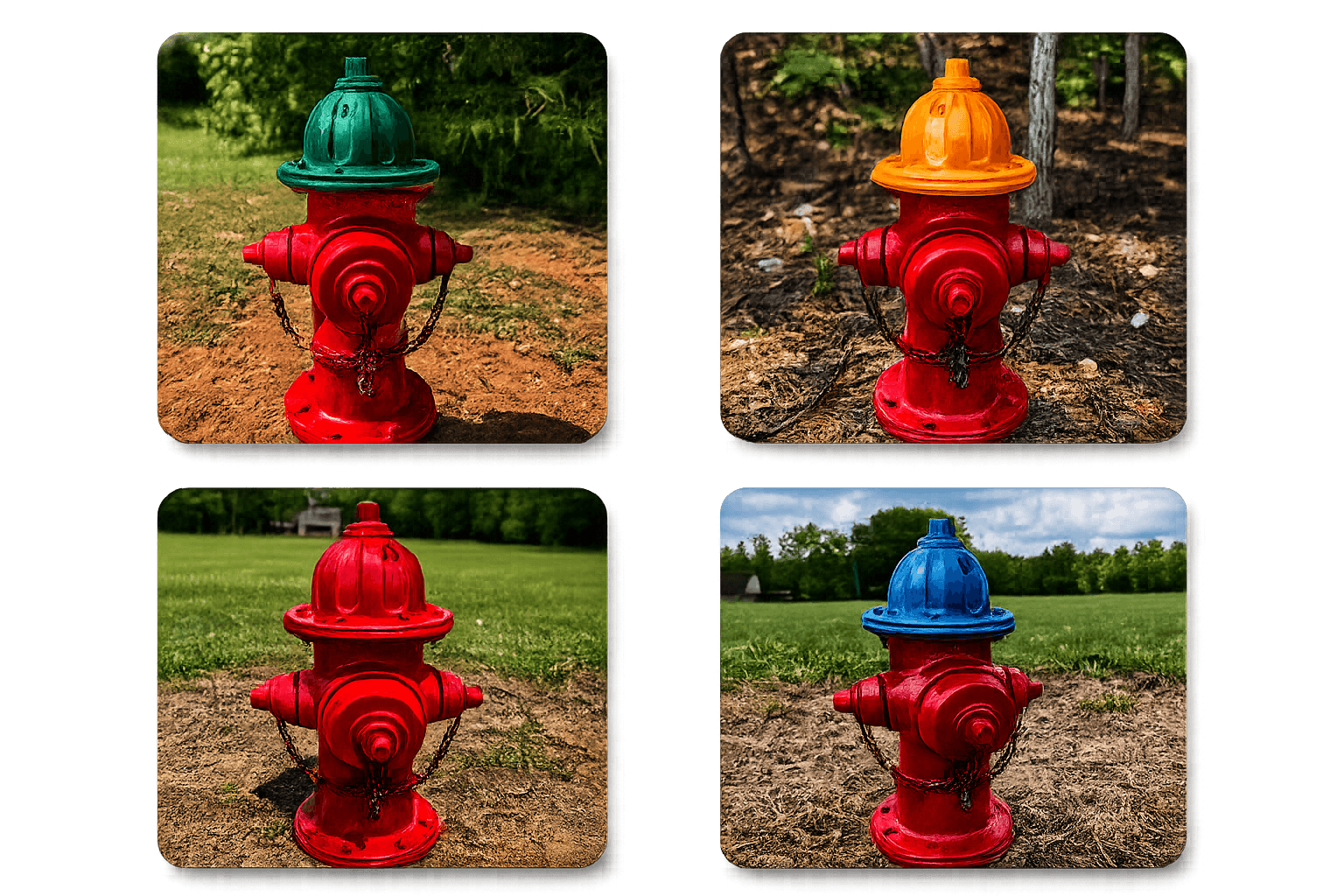
A hydrant is a promise. The map says there is water at the corner of two roads, and when an engine lays in from it at two in the morning, the promise either holds or it does not. Most departments have never opened a third of the hydrants in their district. Some have hydrants on the map that were removed years ago, and hydrants in the ground that are on no map at all.
A hydrant program fixes that, one hydrant at a time, and it produces the single largest block of evidence in a community's fire protection rating. This is what the program includes, how the flow numbers work, and what to have ready if you want to start one.
Four parts of one program
We run the hydrant program as four connected pieces. A department can buy any of them, but they do the most good together.
Hydrant GPS mapping
Every hydrant gets a GPS coordinate, an identifier, and a record: make and type where visible, outlet sizes, condition, and the date. That record grows every year with flow data and maintenance history. What you get is a hydrant database your department can pre-plan from, hand to a mutual aid partner, or put in front of a rating evaluator. Mitchell Turner with Pintlala Fire Department mentioned in a review on our home page that the crew painted hydrants and provided GPS coordinates during a hose and ladder visit. That is the program at its simplest: we were there, so the hydrants got mapped.
Flow testing
A flow test measures what a hydrant can actually deliver. The technician records static pressure on the system with nothing flowing, opens a hydrant and measures the flow through a pitot gauge, and records the residual pressure on a nearby hydrant while water is moving. From those three numbers the available fire flow at 20 psi residual is calculated, and that is the number the hydrant is rated and color coded on.
The recommended practice we follow, and cite on our hydrant service page, is NFPA 291, which covers fire flow testing and marking of hydrants. Two notes about it. First, NFPA 291 is a recommended practice, not a mandate, and it recommends a testing cycle rather than imposing one. Second, private fire service mains are a different matter: hydrants on a private system fall under NFPA 25, which calls for an annual flow test. A plant, a hospital campus, or a large commercial site with its own hydrants needs the annual test.
Maintenance
Opening a hydrant for a flow test is also the moment to service it. Caps, threads, and gaskets are checked so a crew can get a supply line on without fighting it. Operating stems are exercised and lubricated. Drains are checked so the barrel empties after use and does not freeze. Valves are checked for full open and full close. Anything that will not operate, leaks at the barrel, or is missing a cap is written up as a deficiency with a location, so the water system can fix it.
Painting and color coding
Hydrants are painted for two reasons. Visibility, so crews find them at night and in brush. And capacity, so a driver knows at a glance what the hydrant can give. NFPA 291 recommends marking the bonnet and caps by available flow at 20 psi residual:
- Light blue, Class AA: 1,500 gpm or more.
- Green, Class A: 1,000 to 1,499 gpm.
- Orange, Class B: 500 to 999 gpm.
- Red, Class C: under 500 gpm.
Departments can use their own barrel color, and many do. The cap and bonnet colors are what carry the flow information, and we paint to your preferred scheme after the flow test sets the class.
Why the rating depends on this
Water supply is worth 40 of the 105.5 points in the Insurance Services Office rating schedule, second only to the fire department itself. Part of that credit is evaluated on the frequency and completeness of the community's hydrant inspection and flow testing program. A department that can produce a hydrant database with coordinates, flow data, and maintenance dates is showing the evaluator a program. A department that says the hydrants are fine is showing them nothing.
The rule is the same one that applies to hose and pump certificates: evaluators credit documented activity. They cannot credit what you describe but cannot produce.
What the visit looks like
- Scope the district with you. Number of hydrants, the water system that owns them, any known problem hydrants, and whether you want mapping only, mapping and flow, or the full program with maintenance and paint.
- Coordinate with the water system. Flow testing moves a lot of water and can stir sediment. The utility needs to know the dates, and some systems want to be on site. We handle that call with you.
- Work the district hydrant by hydrant. Coordinate, identifier, inspection, maintenance, flow test, and paint. Every hydrant gets the same sequence so the data is consistent.
- Deliver the database and the deficiency list. The digital report covers every hydrant with its coordinate, class, flow numbers, condition, and work done. The deficiency list goes to whoever maintains the system.
Some programs are ten hydrants at a volunteer station. Some are a municipal system that takes weeks. The sequence is the same.
What to have ready
- A hydrant count, even a rough one. It sets the crew and the schedule.
- Any existing map or list. A paper map, a spreadsheet, a utility map export. We reconcile it against what is actually in the ground.
- The water system contact. Name and number of whoever needs to approve flow testing and receive the deficiency list.
- Your color scheme. Barrel color, and whether you want NFPA 291 cap and bonnet coding.
- Traffic control needs. Hydrants on a state highway or a busy county road may need cones and a spotter. Tell us which ones.
- Notice for residents. Flow testing can discolor water briefly. Some departments post a notice; we can tell you when we will be on which streets.
Questions we get
How often should hydrants be flow tested?
NFPA 291 recommends a regular cycle and more frequent testing where the water system is changing or growing. Private mains under NFPA 25 need an annual flow test. Beyond that, a flow test older than your last rating review is not doing you much good. Talk to us about what your evaluator will want to see.
Can you map hydrants without flow testing them?
Yes. Mapping and inspection alone gives you a database and a deficiency list, and the flow testing can follow when the water system is ready.
Do you work with the water utility directly?
We coordinate testing dates and hand over the deficiency list. The utility owns the hydrants and does its own repairs unless it asks us to quote them.
Start the program
Send us your hydrant count and the name of your water system, and we will assess and quote the program. Call the office at (251) 282-0958 or send a message, and Lynn will follow up.
Related service: Hydrant GPS Mapping, Maintenance, Flow Testing & Painting