
Before an Extinguisher Service Visit in Monroeville
By Casey White, Owner · · 4 min read
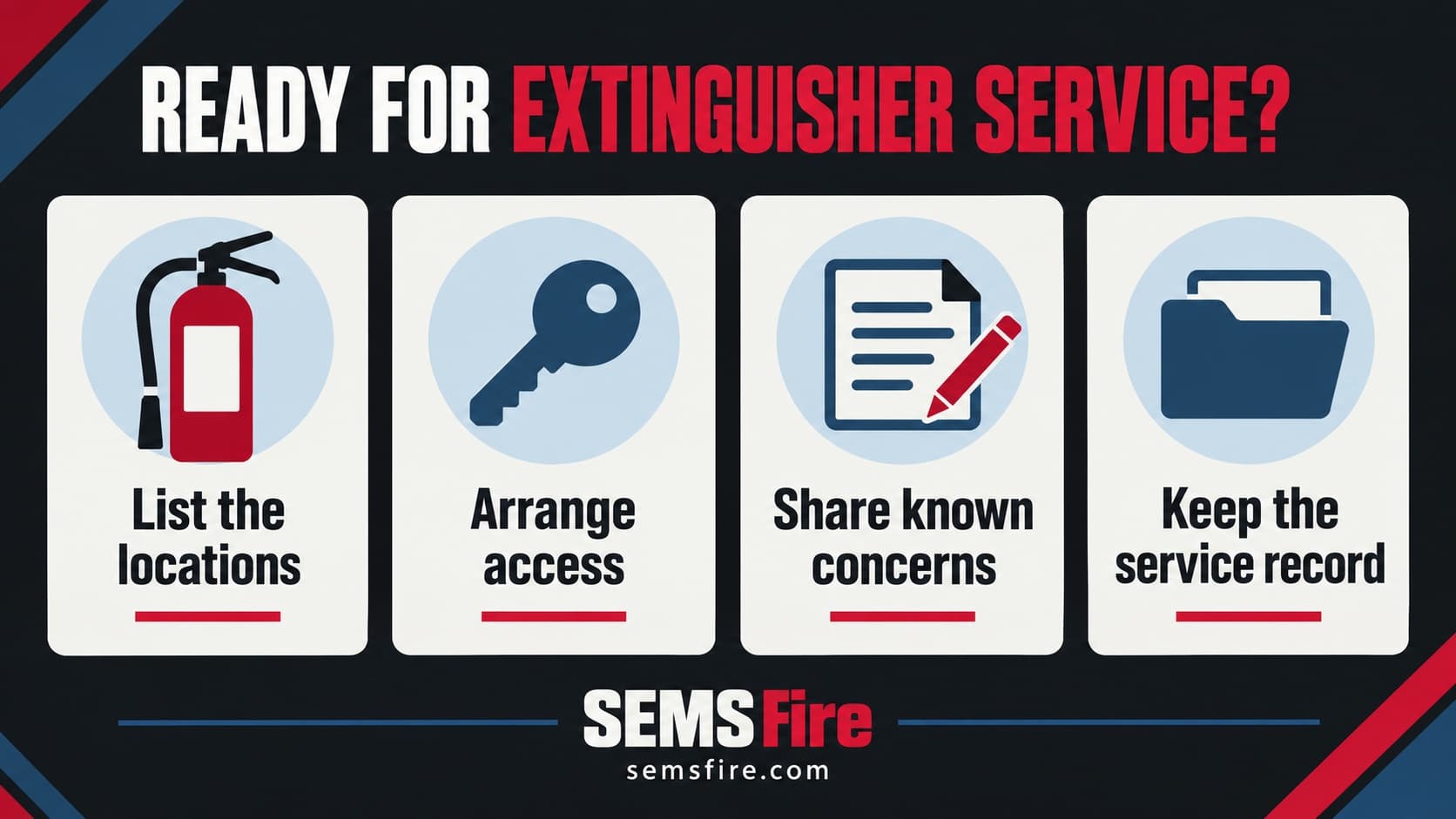
An extinguisher service appointment is easier to coordinate when the facility manager knows where the equipment is, who can provide access and what was recorded at the previous visit. Without that preparation, even a basic question such as “Does this quote include the detached building?” can remain unanswered until the technician arrives.
For a Monroeville business planning service, start with the records you already have. You do not need to inspect internal components, move equipment or decide which units should be repaired. The useful preparation is a clear location list, known concerns and an agreed service scope.
Define the buildings and locations in the request
Gather the existing extinguisher inventory or facility list. Identify the buildings, floors and other areas that you want included, using names the service provider can recognize when arriving on site.
Include detached spaces or separately managed areas if they belong in the request. If a landlord, tenant or another organization manages part of the property, clarify who is arranging and authorizing service for that area.
Give an approximate count if that is all you have, and label it as approximate. Ask how the final inventory will be confirmed. An honest estimate is more useful for planning than a precise number copied from a record that no longer matches the facility.
Bring the previous service record
Locate the latest available service documentation and any record of equipment added, replaced or moved through an authorized process. Include outstanding recommendations that the facility has not yet resolved.
If the earlier report refers to numbered locations, keep that numbering in the new request. Where a room or building name has changed, explain the change so the provider does not mistake one location for two.
For workplaces covered by its portable-extinguisher requirements, OSHA's standard addresses maintenance records. The rule has specific scope and exemptions; confirm the requirements applicable to your workplace rather than using a general article as a compliance determination.
Share known concerns without diagnosing them
If staff have reported damaged equipment, a missing unit, an accessibility concern or a changed condition, include the existing observation and location. Record when it was reported and any action already taken through the facility's procedures.
Do not attempt a repair, discharge an extinguisher or remove it from its assigned location to prepare for the visit. Ask qualified personnel how a current concern should be handled under the facility's process.
Let the service provider determine what assessment is needed. A reported concern can be included in the request without the facility manager deciding in advance that a particular part, recharge or replacement will resolve it.
Arrange access and identify the decision-maker
Confirm who will meet the technician and provide authorized access to the agreed areas. Note controlled entrances, tenant coordination or times when certain spaces cannot be entered. Keep security codes and sensitive access details out of general email threads; use the facility's approved process.
Name the person who can approve work beyond the original quote. If that requires a purchase order or another manager's approval, explain the process in advance. Ask how new findings and any proposed change in scope will be communicated.
SEMS provides extinguisher inspection, maintenance, repair and sales. The office can confirm which work fits your request and whether the service location is within the available coverage and schedule.
Ask about protection during any service removal
If equipment may need to be removed for maintenance or recharging, discuss the protection arrangements before that happens. Do not assume the facility can simply wait for its extinguishers to return.
For workplaces to which the relevant provision applies, OSHA requires equivalent alternate protection while extinguishers are removed for maintenance or recharging. Ask your qualified provider and responsible facility personnel how the applicable requirements will be met.
This is a coordination question for the planned scope. It is not permission to relocate equipment, substitute a different type or alter the facility's emergency arrangements without the appropriate direction.
Keep the outcome and follow-up together
After the visit, match the documentation to the agreed locations. Review what was completed, what equipment changes were recorded and what recommendations remain open. Ask for clarification if a location or finding is unclear.
Assign each remaining item to a person with a next action. Retain the service record where the responsible facility staff can retrieve it, including at a management handover. A record kept only in one employee's inbox is harder to use when that person is unavailable.
Our extinguisher service timing article covers the earlier planning questions. This visit checklist helps you turn the current request into an organized scope and follow-up record.
Contact SEMS with your business location, approximate extinguisher count and existing service needs. Include your facility contact so the office can review the request and prepare the appropriate quote.
Related service: Fire Extinguisher Service, Inspection, Repair & Sales