
Before Your Apparatus Pump Test: Prepare and Follow Through
By Jason White, Owner · · 4 min read
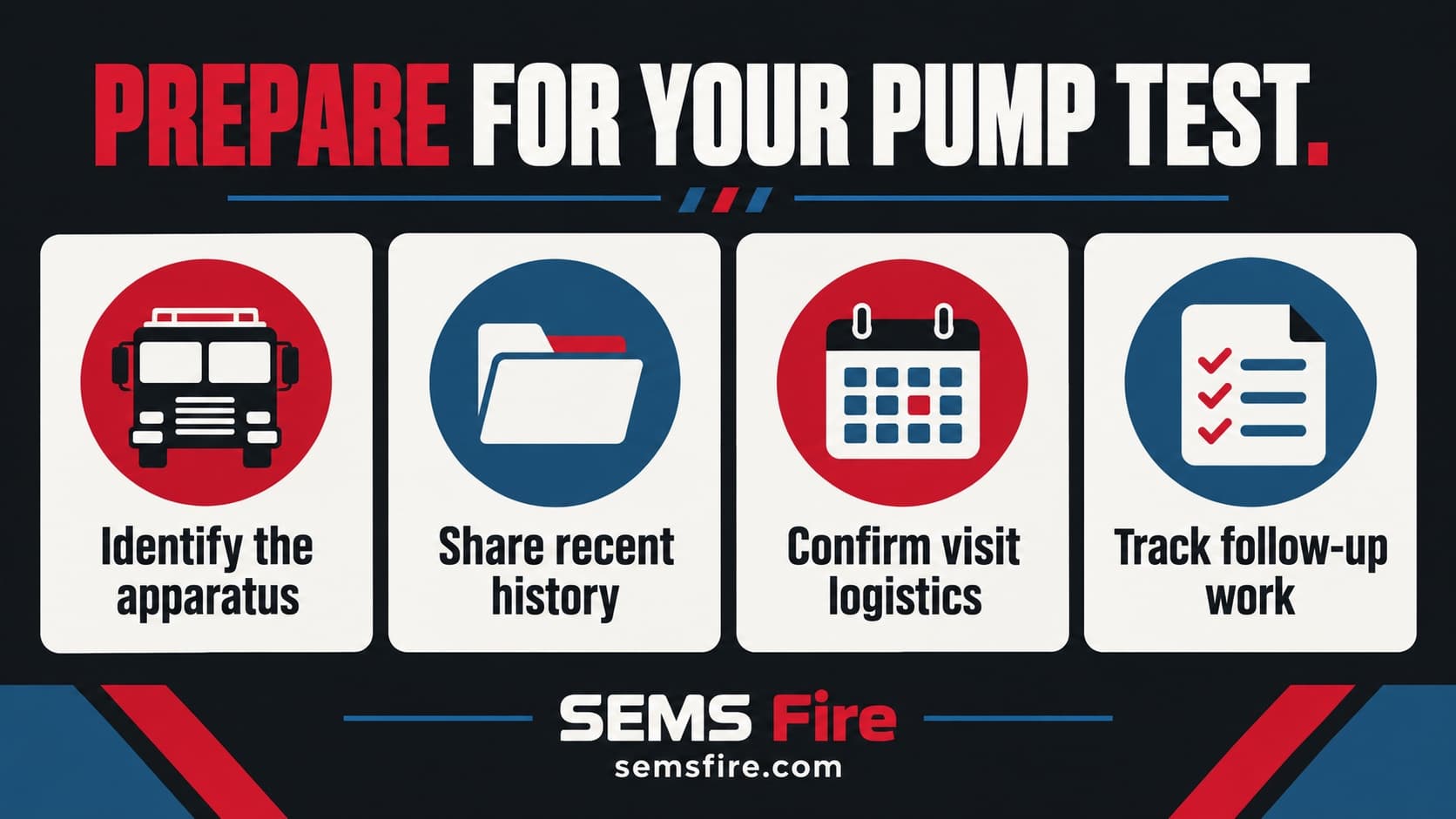
There are two easy places to lose useful information around an apparatus pump test. Before the visit, the previous report may be in one inbox while an operator's concern is in another. Afterward, a new report may be filed without anyone taking responsibility for its recommendations.
The department can improve both handoffs before the appointment is booked. Gather the history, confirm the visit arrangements and decide who will track the outcome. These steps help define the work and keep unresolved items visible.
This article concerns pumps installed on fire apparatus. It is not a preparation guide for a building's sprinkler-system fire pump, and it does not provide operating or testing procedures.
Identify the apparatus and requested service
Start the inquiry with the department's apparatus identifier and the available pump and apparatus details. Explain whether the request is for a planned test, maintenance, assessment of a reported concern or a combination of those services.
Keep those requests separate in the message. “Test the pump” does not fully explain a known concern that also needs assessment. Likewise, a routine test booking should not be treated as authorization for unspecified repair work.
SEMS's apparatus pump testing and preventative maintenance service includes evaluation and reporting. The office needs your specific information to confirm the scope and arrange a suitable visit.
Gather the previous records
Find the last available pump test report, relevant maintenance documentation and records of any work completed since that test. Keep the original files, including any notes or recommendations, together in the request package.
If a previous finding led to a repair, include the repair record. If it remains open, identify it as an outstanding item rather than assuming the next test will resolve it. If you cannot find the record, state that clearly.
A simple cover note can explain the sequence: the previous test date, later documented work and the current request. There is no need to reinterpret the report's technical values. Let the qualified provider review them in context.
Share existing concerns without running a new test
Ask the responsible department contact to gather observations already reported through the normal equipment process. Record who reported the concern, when it occurred and what was observed. Keep the original account where possible.
Do not ask personnel to operate the pump, change valve positions or recreate a problem just to make a service inquiry more detailed. Technical preparation and assessment should follow the applicable procedures under qualified direction.
If the observation is unclear, ask the provider what further information it needs. A careful account with an acknowledged gap is better than a confident diagnosis that the existing evidence does not support.
Confirm site arrangements with the provider
Give the office the service location, access restrictions and a department contact for the visit. Ask the provider to specify its site requirements and what arrangements need to be confirmed beforehand.
The department should plan apparatus availability and operational coverage through its own process. Discuss those constraints early. Avoid assuming the provider can use a particular location or complete a fixed number of apparatus within a certain time until the scope and arrangements are confirmed.
Also identify who can authorize work outside the initial scope. If additional assessment or repair requires another quote or purchase order, make that boundary clear before the visit. This allows a finding to become a documented decision instead of an informal instruction nobody can later verify.
Read the report for actions as well as results
When the report arrives, confirm that it identifies the correct apparatus and service date. Review the findings, completed work and recommendations with the responsible department contact. Ask the provider to clarify language that does not make the next step clear.
The department should be able to distinguish a documented result from a recommendation for additional work. Do not assume a report means every earlier concern has been addressed or that a separate repair was included in the test.
Our pump test report article provides background on the certificate. Questions about a specific result should go to the qualified provider with the actual report, rather than being answered by comparing isolated numbers online.
Give each follow-up item an owner
For every remaining action, record the apparatus ID, finding, responsible contact and next step. Add the quotation or authorization when it becomes available, then retain the documentation of completed work and any further required evaluation.
Keep operational decisions within the department's established process. Filing the report, closing an invoice and determining apparatus status are related activities, but one should not be used as a substitute for the others.
The benefit of this approach is continuity. At the next visit, the new report can be read alongside a clear history instead of becoming another document with unexplained open items.
Send SEMS your apparatus details and previous pump report, with existing concerns and the requested service location. The office can review the request and confirm the scope for assessment and a quote.
Related service: Fire Pump Testing & Preventative Maintenance