
Ground Ladder Damage: When to Ask for Inspection
By Jason White, Owner · · 4 min read
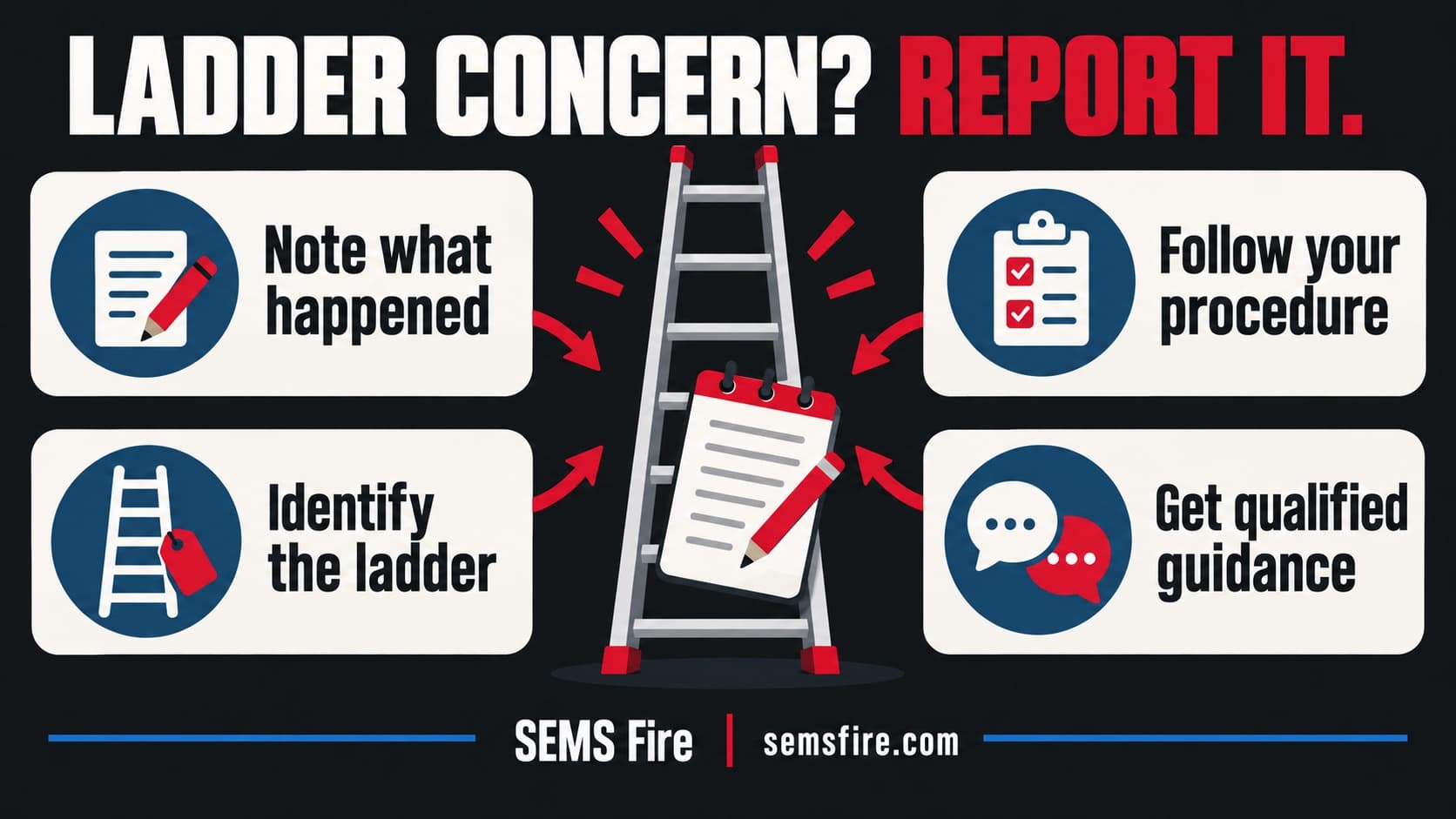
A ground ladder has a recent test report. Later, a crew member notices a changed heat label, a loose component or damage after an incident. The old report is useful history, but it cannot assess what happened afterward.
A new concern needs a new decision. Report it through the department's equipment process, identify the exact ladder and seek the appropriate qualified assessment. Waiting for the next planned testing visit should not become the default answer to an unresolved condition.
This guide helps organize that follow-up. It does not tell someone how to diagnose damage, repair a ladder or conduct a service test.
Record what changed
Begin with the observation and when it was discovered. Describe the location of visible damage or the component involved. Record any known incident or exposure history without trying to establish a cause you cannot verify.
“Label appears darker than in the earlier photograph” is an observation. “The ladder was overheated and the metal failed” is a technical conclusion. Keep those separate so the manufacturer or qualified assessor can evaluate the available information.
If photographs already exist or can be taken safely without manipulating the equipment, preserve them with the ladder's identifier. Do not stage a load, climb the ladder or recreate an incident to produce evidence for a service request.
Use the actual manufacturer's instructions
Manufacturer guidance matters because the appropriate response depends on the equipment and finding. Avoid treating a rule for one brand or model as a complete procedure for every ladder in the station.
For example, Duo-Safety's maintenance booklet directs removal from service for a loose rung on its aluminum ladders, followed by repair and service testing before further use. The booklet also gives specific removal and evaluation instructions for black heat-sensor labels.
It separately notes that harsh chemicals can darken labels. A changed label therefore needs attention without being treated as definitive proof of the cause. Follow the applicable manufacturer instructions and department process; do not dismiss the concern or replace a label simply to make the ladder appear ready.
If the manufacturer or model is uncertain, say so when requesting guidance. An unreadable label is a missing piece of information to resolve, rather than a reason to borrow instructions from a similar-looking ladder.
Make the department's status decision clear
Notify the officer responsible for equipment decisions and follow the department's process for identifying and controlling equipment with a concern. The person arranging an appointment should know who owns that decision and who must be informed.
Record the status assigned through that process and the date. If responsibility changes between shifts, the next person should be able to see the concern and outstanding action without relying on a verbal conversation.
Keep the appointment status separate. “Inspection booked” describes a service arrangement; it does not resolve the equipment finding. Likewise, a provider receiving photographs does not mean the ladder has been cleared for use.
Send a complete assessment request
Gather the existing information before contacting the provider:
- Department asset ID and manufacturer/model, where known.
- Ladder type, length and usual apparatus assignment.
- Date and description of the concern.
- Known incident or exposure history.
- Previous test report and relevant repair records.
- Department contact responsible for the next decision.
Provide the original wording from earlier reports. If the history is incomplete, identify what is missing. A short, accurate record is more useful than a detailed story assembled from guesses.
Ask the provider what assessment it can perform, what information it still needs and whether manufacturer involvement is appropriate. Confirm the proposed scope before assuming a scheduled load test will answer every possible question about the condition.
Keep the outcome connected to the concern
When assessment or corrective work is completed, retain the report with the original concern. Record further recommendations, any required testing and who is responsible for remaining actions.
Avoid closing the item with a vague note such as “looked at.” The next equipment officer should be able to identify what was assessed, what work was completed and what decision followed under the department's process.
If a replacement is selected, keep the old ladder's history distinct from the new asset. Changing the equipment does not make the earlier finding disappear from the department's records.
Request the right follow-up
SEMS provides ground ladder inspection and testing services. Contact the office with the ladder identity, existing records and the documented concern so the team can confirm the appropriate scope and quote.
If you are comparing providers, our ground ladder provider checklist gives you questions about reporting and follow-up. For a current concern, the immediate next step is to send SEMS the known details while following your department's equipment procedures.
Related service: Ground Ladder Testing