
Choosing a Ground Ladder Testing Provider: What to Ask
By Jason White, Owner · · 4 min read
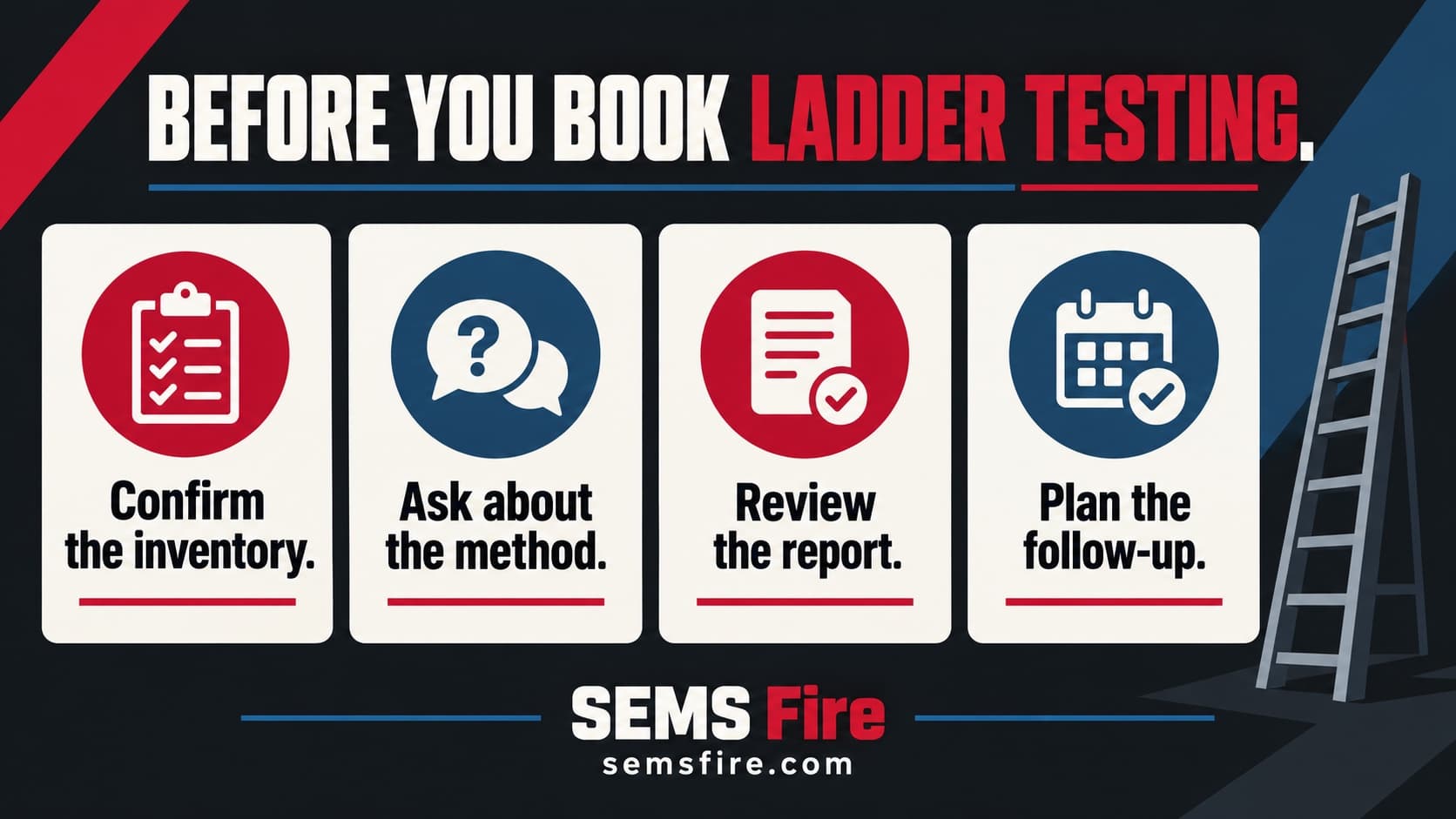
When a department compares ground ladder testing providers, the total at the bottom of the quote is only one part of the decision. The department also needs to know which ladders are included, what the service covers and what records will arrive afterward.
Those details matter whether you are replacing a provider, arranging your first outside visit or comparing an outside service with building an internal testing program. Start with the work your department needs to account for. Then ask each provider to quote the same scope.
Start with an inventory the provider can recognize
A ladder count is a useful opening. An identifiable inventory is better. Gather the asset number, manufacturer, type, length and normal apparatus assignment from your existing records. Flag gaps rather than filling them with assumptions.
Include reserve ladders and equipment stored away from the main apparatus bays if you want them included. Tell the provider about previously documented concerns, repairs or missing records before the visit. A known concern may need a different assessment from the planned service test.
Ask how the provider handles an unreadable label or a mismatch between the department's list and the equipment presented. Agreeing on that process keeps a record problem from becoming an unidentified test result.
Ask about the complete service scope
Ask the provider to explain what inspection and testing are included, how the actual manufacturer's guidance is addressed and which standard and edition apply to the proposed work. Confirm that against your department's requirements.
A standard number on a quote is the beginning of that conversation. It should not replace an explanation of the equipment covered and the work to be documented. The provider should also explain how concerns discovered during the visit affect the next step.
If your department is considering purchasing testing equipment, compare the broader responsibilities as well: appropriately qualified personnel, applicable procedures, equipment care, records and follow-up. An equipment purchase and a complete service program are different budget items. This article does not provide a testing setup or procedure.
Look at a sample report before booking
Ask for a sample with any other customer's identifying information removed. Check whether you could use that report to find the result for one particular ladder without calling the provider for clarification.
Duo-Safety's maintenance booklet recommends a maintenance log for each ladder to supplement testing reports and preserve its damage and repair history. That is a useful question to take into any provider conversation: how will the new documentation connect to the history you already keep?
For a practical comparison, look for a clear asset identifier, service date, scope, findings and any remaining action. Ask who receives the report, in what format and how corrections are requested. A report that is understandable only to its author will be harder to use at the next handover.
Discuss findings before there is a finding
Ask how the provider communicates a concern during the visit. Identify the department contact who can receive that information and make the appropriate administrative decisions.
Clarify whether the quote covers testing alone or any separately authorized follow-up. Ask how further assessment, repair recommendations and additional testing would be proposed. Do not assume every issue can be corrected during the original visit or that a repair is automatically included in the quoted price.
The department should retain a clear record of outstanding work. A completed appointment is not, by itself, a decision about every ladder's operational status. That decision needs to follow the applicable guidance and your department's procedures.
Plan around the apparatus and station
Tell the provider how the ladders are assigned and what access constraints the station has. Confirm who will be present, where authorized work will take place and how the department will manage its operational needs during the visit.
Ask how apparatus assignments and mounting positions are recorded. SEMS's ground ladder service includes inventory organization and returning ladders to their existing apparatus positions. Make configuration handling an explicit part of the scope rather than a last-minute instruction.
If you are considering a combined hose and ladder visit, raise that while requesting the quote. Our earlier article on combined visits explains the service pairing. The office still needs to confirm the scope and available schedule for your department.
Compare the written answers
Place the proposals beside the same inventory and checklist. Are they quoting the same equipment? Do they explain the records, exclusions and follow-up? Are any assumptions still unresolved?
The value of this comparison is a clearer purchasing decision. It helps the department see which work is included and which questions need an answer before it commits its budget and staff time.
To request a SEMS quote, send your ladder inventory and location, along with existing reports and any known concerns. Include the department contact and preferred planning window so the office can confirm the appropriate service scope.
Related service: Ground Ladder Testing