
Fire Apparatus Repair or Maintenance? Plan the Right Visit
By Jason White, Owner · · 4 min read
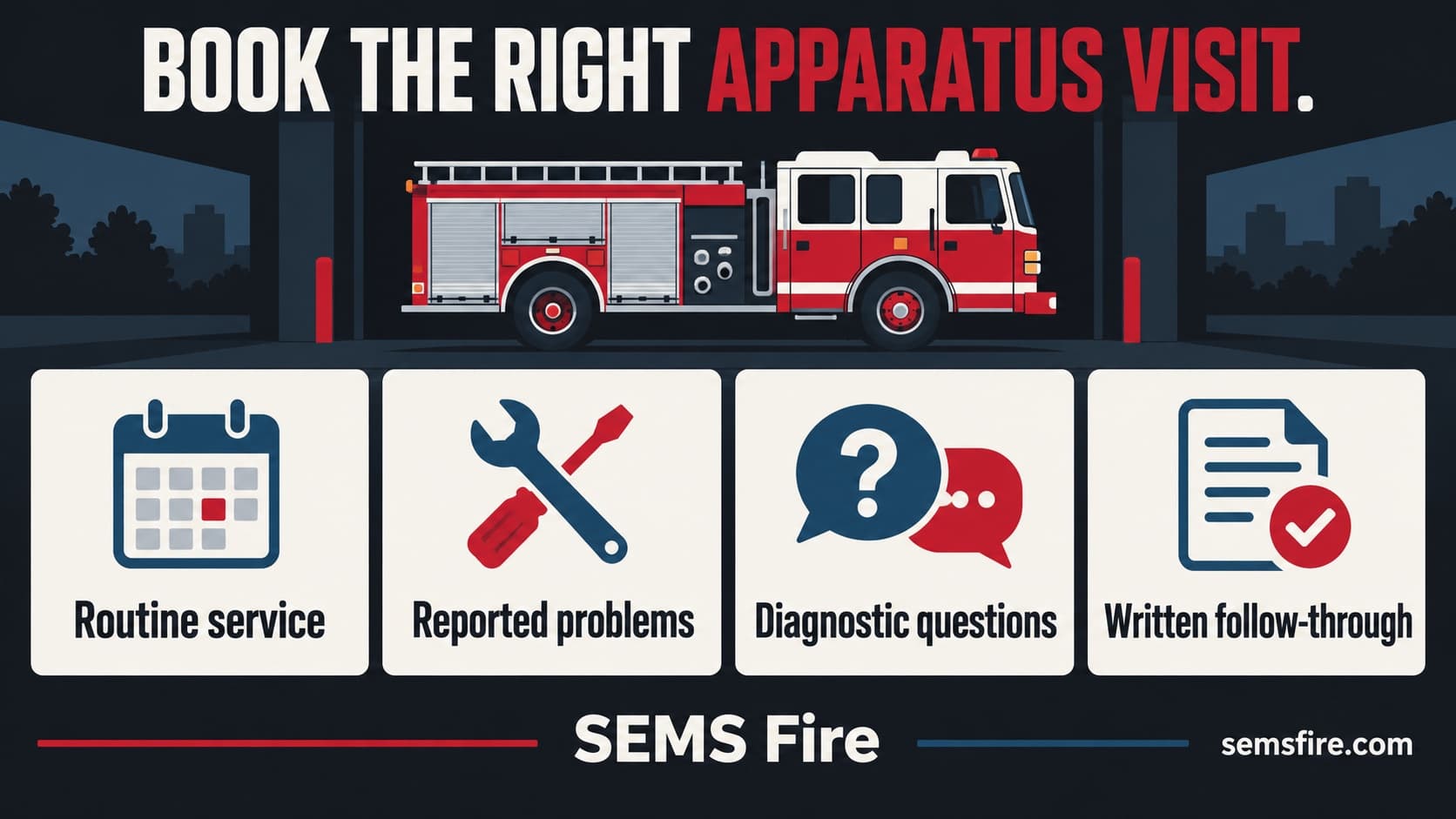
“The apparatus needs service” can mean several different things. A planned maintenance task is coming due. An operator has reported a new concern. An earlier report contains a recommendation that has never been authorized. Sometimes all three are true.
Before booking the visit, separate those needs. It helps the provider understand the request and helps the department approve the right work. A maintenance appointment should not conceal an unresolved repair concern, and a request to assess one problem should not be mistaken for approval of every service task.
Start with the reason for the visit
For planned maintenance, identify the task or schedule your department is working from and supply the relevant service history. For a reported problem, describe what was observed and when it was reported. If you have both, put them in separate sections of the request.
An operator's account is useful evidence. Keep it factual: the apparatus involved, the reported behavior, when it occurred and any existing written findings. Do not turn a symptom into a confirmed parts diagnosis before qualified assessment.
You do not need to reproduce a concern or operate equipment to gather more detail for a quote. Follow the department's procedures for current equipment concerns and let the service provider explain what information is needed for assessment.
Distinguish assessment from authorized repair
A provider may need to assess a concern before it can define corrective work. Ask what the initial assessment includes and how the results will be communicated. Clarify what the department is authorizing at that stage.
Name the person who can approve additional work and specify how that authorization should be recorded. If approval requires a purchase order or another internal step, explain the process before the visit.
SEMS offers apparatus and pump diagnostics and repair, alongside fleet maintenance. Those service categories help frame the conversation, but the agreed scope still needs to describe your apparatus and the work being requested.
Supply the history that explains the request
Gather the apparatus identifier, relevant equipment details and recent service records. Include the original report behind any recommendation you want addressed. If a component was previously repaired or replaced, supply the available documentation instead of relying on someone's recollection of the date.
A useful request can separate the information into three short lists:
- Planned work: the maintenance tasks being considered.
- Reported concerns: observations needing qualified assessment.
- Earlier recommendations: items from previous documentation that remain open.
Where records conflict, mark the uncertainty. If a recommendation may already have been completed, ask for the supporting record before ordering it again. This avoids treating an old note as a current work instruction without checking its history.
Make the department's constraints visible
Share the location, site access and the contact who will be available. Explain any limits on when the apparatus can be made available, while keeping operational coverage decisions within the department.
Discuss budget and authorization boundaries plainly. If the department has approval for assessment but needs a separate decision for repairs, say so. If several apparatus are included, identify whether the same authorization applies to each one.
Ask the office to confirm the proposed timing and what could require a follow-up visit. Do not build the department's coverage plan around an assumed completion time before the scope is understood.
For a request involving an apparatus already out of service, our repair-request guide explains the information to gather. The office should still confirm availability and the work it can perform; an inquiry is not an emergency response commitment.
Review the report against the approved scope
After the visit, compare the documentation with the work that was authorized. Identify what was completed, what was assessed and what remains recommended or unresolved.
A note that an apparatus was “serviced” is too broad if the original request contained several separate concerns. Ask for clarification where the record does not show what happened to a specific item. File the original observation, assessment and completed work together so another officer can follow the history.
A completed appointment or paid invoice does not independently authorize return to service. Follow your department's process and the guidance of the responsible qualified personnel for that decision. Keep that decision distinct from the administrative closure of a purchase order.
Plan the next action while the record is current
Give every remaining recommendation an owner and next step. Some may require a quote, a purchasing decision or additional information. Record that explicitly rather than leaving everything in a general maintenance folder.
When the next service request is prepared, these records provide a starting point. The department can see what is routine, what changed and which earlier items still need a decision.
To discuss the right visit with SEMS, send your apparatus details and service history, along with the planned tasks and reported concerns. The office can help define the assessment, maintenance or repair scope for a quote.
Related service: Apparatus & Pump Repair