
Apparatus Out of Service: How to Send a Repair Request That Gets You Back Faster
By Jason White, Owner · · 5 min read
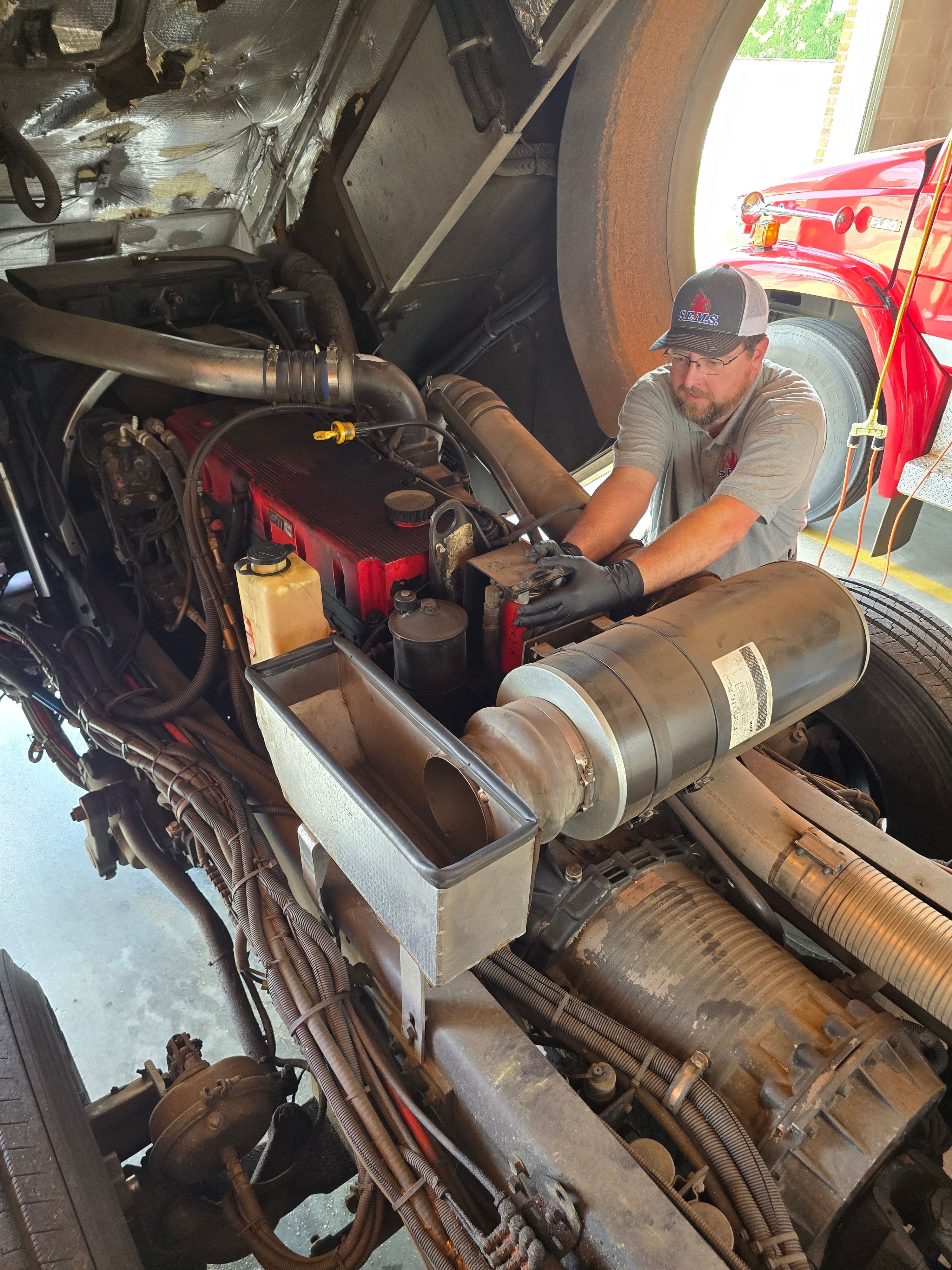
"Out of service" is the most loaded phrase in the fire service. It means the district is covered by fewer apparatus than it planned on, mutual aid is picking up calls, and the chief is answering questions from a board or a council about when it will be fixed.
We repair apparatus and pumps on site, and the repair starts with the phone call. This article is about making that call count: what to have ready, what happens next, and, at the end, how the departments that call us least manage it.
What to have ready when you call
Six things. You will not always have all of them, and that is fine, but each one shortens the time between the call and the apparatus being back in service.
- Which apparatus and what it is. Engine, tanker, rescue, brush truck, or ladder truck. Year, make, and the pump rating if it is a pump problem. We keep records on apparatus we have tested or repaired before, so if we have been to your station, tell us and we will pull the history.
- What it is doing, in plain words. "Will not draft." "Pressure falls off after ten minutes." "Check engine light and it goes into derate." "Discharge three will not close all the way." Describe the symptom, not the diagnosis. We will do the diagnosis.
- When it does it. Cold start only? After running an hour? Under load at the pump? Only from draft? A pattern is half the diagnosis.
- What the gauges and lights said. Pressure readings, vacuum, temperature, warning lights, fault codes if the apparatus displays them. A photo of the panel is worth more than a description.
- Recent history. The last pump test date and result, any recent repair, anything that was noted as a deficiency last year. The annual test report is usually the best clue we have.
- Whether it can move, and where it is. If the apparatus can be driven to a test site or we need to come to the bay, that changes what the technician brings.
Photos and a short video of the problem sent to the office go straight to the technician assigned.
What happens next
We assess and quote. That order matters. A technician assesses the apparatus, finds the actual cause, and then the office builds an estimate with the scope and the number. We do not price a repair over the phone from a description, because the description is a symptom and the estimate has to be for the cause.
Two rules we hold to, because we would rather you hear them here than be surprised later.
- Lynn confirms every date. The technician or the office will offer a window. The confirmed date and time come from Lynn Gibson, our scheduling coordinator, because priority jobs move the schedule and only the office can commit a slot.
- We do not run after-hours crews. An urgent call after hours is flagged as urgent and the team gets on it first thing the next business day. We will not tell you someone is on the way tonight if nobody is.
If the problem is something the technician can correct on the spot during an assessment, they will tell you that, and you decide.
What we see most often
The repair work we do is described on our apparatus and pump repair page, and the same handful of problems account for most of it. Most of them are preventable.
- Leaks and valves. Packing, valve seats, tank-to-pump connections, plumbing under the panel, and discharge or intake valves that will not seat or fully open.
- Primers, relief valves, and gauges. The pump cannot draft, cannot control pressure, or the operator cannot trust what the panel says.
- Batteries and charging. An apparatus that sits for days between calls is hard on batteries.
- Lighting and electrical. Warning lights, scene lights, sirens, and wiring problems, which our lighting and upfitting side handles alongside the repair shop.
Almost all of it shows up first on the annual pump test, which is why we wrote a separate article on what that test measures.
What the repair visit includes
Diagnostics on the pump, plumbing, valves, and electrical systems. Leak detection. Valve, intake, and discharge repair. Warning and lighting system repair. Mechanical, driveline, suspension, and air system work. Every repair is documented with what was found, what was done, and what to watch, so the record follows the apparatus. The full list is on our apparatus and pump repair page.
How to stay off this page
The departments that call us least for repairs are the ones that have us in the bay on a schedule. Preventative maintenance on the chassis and the pump finds the leak while it is a weep, the valve while it is stiff, and the battery while it still starts the apparatus.
Our fleet maintenance visit is bumper to bumper: engine and transmission service, fluids and filters, driveline, suspension, and electrical evaluation, and a pump and equipment inspection, with a maintenance record and a deficiency list at the end. It pairs naturally with the annual pump test, which is when most developing problems first show up. A pump that needed more engine speed to make capacity this year than last year is a repair next year if nobody looks.
The math is simple. A scheduled maintenance visit is downtime you chose. A failure is downtime you did not.
Questions we get
Can you come to our station, or do we bring the truck to you?
We come to you. Every service we offer is performed on site. If a repair needs a lift or a shop environment we cannot bring, we will say so up front.
Do you work on brush trucks and rescues, not just engines?
Yes. Any apparatus in the fleet, pump or no pump.
What if we need it back in service tomorrow?
Tell us. The office flags it urgent, a technician assesses and quotes it, and Lynn confirms the date. A repair that needs parts waits on the parts, and we will say so rather than guess.
Send the request
Call the office at (251) 282-0958 with the six things above, or send a message with photos, and Lynn will follow up to set the assessment.
Related service: Apparatus & Pump Repair