
Annual Fire Pump Testing: What the Numbers on Your Certificate Mean
By Jason White, Owner · · 7 min read
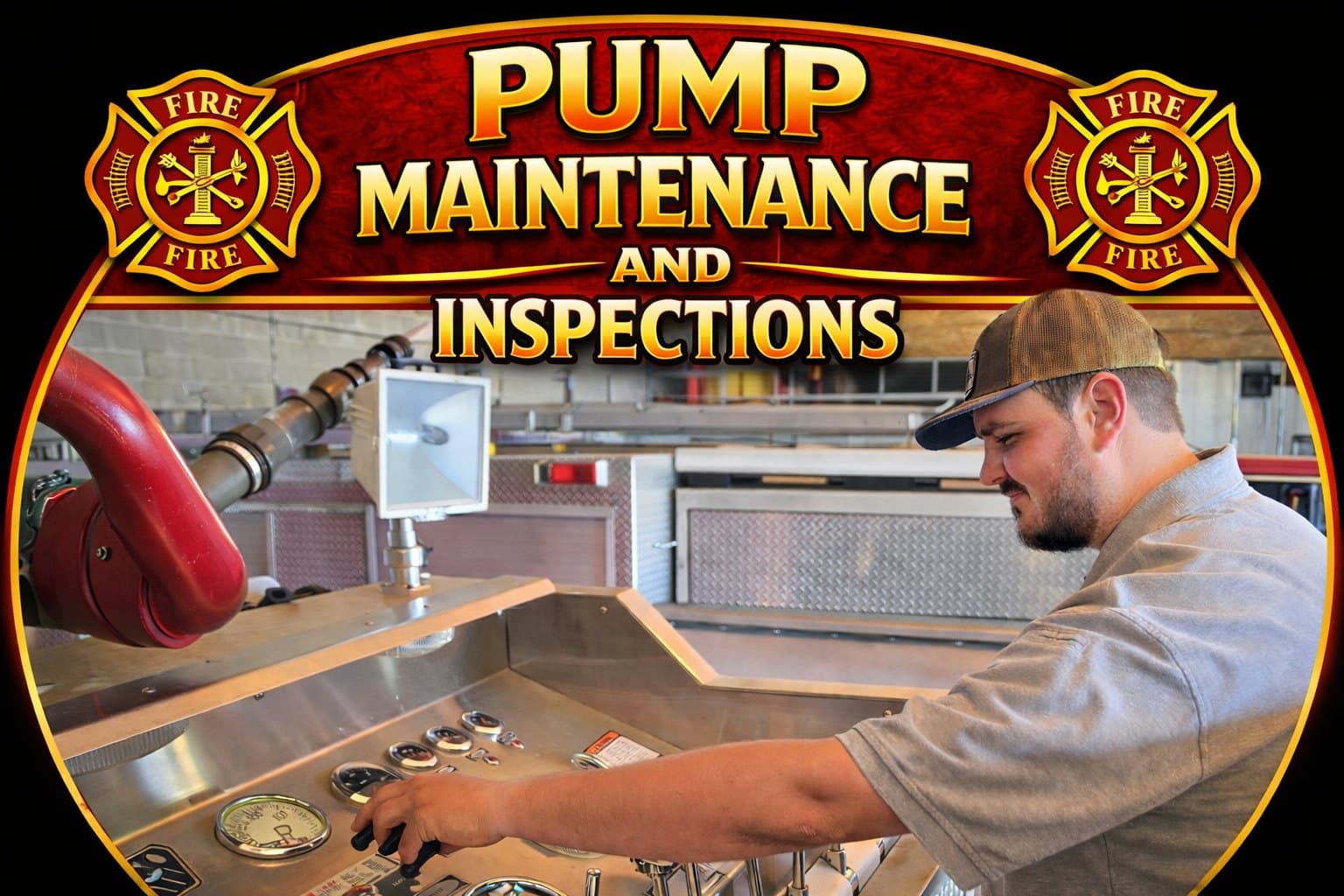
Every fire pump has a plate on it that states a rated capacity. A 1,250 gallon per minute pump is supposed to move 1,250 gallons a minute at 150 psi. A chief who knows that number is real can plan an attack around it. A chief who is guessing is planning around a number that may not exist anymore.
The annual pump performance test is how you find out. We run it on site, on your apparatus, with calibrated equipment, and the report you get back is a set of numbers. This article explains what each one means so the report is something you can read, not just file.
The standard, and what people call it
We test to the fire apparatus standard as it appears on our pump testing service page and our reports: NFPA 1910, which covers inspection, maintenance, testing, and retirement of in-service emergency vehicles. Most chiefs still call the annual pump test "the 1911 test," from the standard number it carried for years, and the test itself is the same sequence. Our technicians are EVT certified and the test is run the same way on a 500 gpm brush truck pump as on a 2,000 gpm municipal engine.
What each part of the test measures
The full test is a sequence. Each step checks one thing, and the report records each one.
Vacuum test
Before any water moves, the pump is closed up and the primer pulls a vacuum. The pump has to reach at least 22 inches of mercury and hold it. If the vacuum drops faster than the standard allows over the timed hold, air is getting in somewhere: a packing gland, a valve seat, a drain, a gauge line. A pump that cannot hold a vacuum will struggle to draft, and drafting is exactly what a rural department needs from it.
Pumping test
This is the part the certificate is built on. The pump is put to work from draft, or from a source that can supply its rated capacity, and it has to deliver:
- 100 percent of rated capacity at 150 psi net pump pressure for 20 minutes.
- 70 percent of rated capacity at 200 psi for 10 minutes.
- 50 percent of rated capacity at 250 psi for 10 minutes.
Flow is measured at the discharge with calibrated equipment, not read off the panel flowmeter. Engine speed, pressures, temperatures, and flow are recorded through each run. A pump that makes capacity at 150 psi but cannot hold 70 percent at 200 psi is telling you something specific about wear.
Pressure control test
The relief valve or pressure governor is tested to confirm it does what it is there for: when a discharge closes suddenly, the pressure on the remaining lines cannot spike past the set limit. A relief valve that is stuck, set wrong, or slow is a hose-burst waiting for a fireground.
Intake relief valve, gauge, and flowmeter checks
The intake relief valve is checked. Every gauge on the panel is compared against a calibrated master gauge and any gauge reading outside tolerance is noted, because an operator who trusts a gauge that reads 30 psi low is running lines at pressures they do not know about. Flowmeters are checked the same way.
Tank-to-pump flow
For apparatus with a water tank, the rate the tank can feed the pump is measured. A tank-to-pump valve that has partially closed, or a tank baffle problem, shows up here and nowhere else.
Reading the report
The report you receive lists the rated capacity, the actual flow achieved at each pressure point, engine speed at each point, the vacuum achieved and held, the pressure control result, and any gauge that was out of tolerance. Three things to look at first.
- Did it make capacity at 150 psi? If yes, the pump is certified to its rating. If no, the report says what it did make, and that number is the one to plan around until the pump is repaired.
- How hard did the engine work to do it? Engine speed at rated capacity, compared to last year, is an early indicator of pump wear. A pump that needed 200 more rpm than it did last year to make the same flow is losing efficiency.
- What was noted? Gauge corrections, a slow relief valve, a vacuum that held but only just. Those are next year's failures if nothing is done.
What the test usually finds first
The pump repair work on our repair page reads like a list of annual test findings, because that is where most of it starts: pressure problems, intake and discharge problems, valve failures, seal and packing leaks, primer systems, and gauges. A vacuum that is slow to build, a discharge that will not fully close, a gauge that reads low. Each of those is a small note on a test report in the spring and an out-of-service apparatus in the fall if nobody acts on it. The test is the cheapest place to find them.
What to have ready
- A water source that can supply the rating. For a full test the pump should draft from a static source, or work from a hydrant that can supply rated capacity. If your station hydrant cannot supply a 1,500 gpm pump, tell us and we will plan a draft site.
- Room to flow water. Rated capacity for 20 minutes is a lot of water. A lot, a drainage ditch, a pond, or a retention area that can take it without flooding a neighbor.
- The pump operator, if possible. Your driver or engineer knows that apparatus and its quirks. It is not required, but it makes the test go smoother and it is a good training day.
- Last year's test report. Year-over-year comparison is where the early warnings live.
- A full fuel tank. Twenty minutes at rated capacity is hard work for the engine.
When the pump does not make capacity
The report says exactly what it did make and at what engine speed. From there we assess and quote the repair. Common causes are worn impellers or wear rings, packing that has been over-tightened or neglected, a primer that will not pull vacuum, or a transfer valve problem on two-stage pumps. Some of it is a same-visit adjustment. Some of it is a scheduled apparatus and pump repair. Either way the report stands on its own and the decision is yours.
Why the certificate matters beyond the fireground
Engine companies and their pump capacity account for up to 15 percent of the points available in a community's fire protection rating, and annual pump test certificates are among the documents an evaluator asks to see. A current certificate that shows rated capacity is credit. A pump that flows fine but has no test on file is not.
Questions we get
Do you test pumps on brush trucks and tankers?
Yes. Any apparatus with a fire pump gets the same test, scaled to its rating.
Can you do pump maintenance on the same visit?
Yes. Many departments combine the annual test with preventative maintenance on the pump and, if they want, the chassis. Ask Lynn when you book.
What if the pump fails and we need it in service?
Tell us at the test. We will assess and quote the repair and, if it is something we can address on the spot, we will tell you that too. We do not run after-hours crews. A repair that needs parts is scheduled by the office once the parts are in hand, and Lynn confirms the date.
Get the pump test scheduled
Tell us how many pumps you have and when they were last tested. Call the office at (251) 282-0958 or send a message, and Lynn will follow up to set the date.
Related service: Fire Pump Testing & Preventative Maintenance