Choosing a Fire Hose Testing Company: Scope the Visit
By Jason White, Owner · · 4 min read
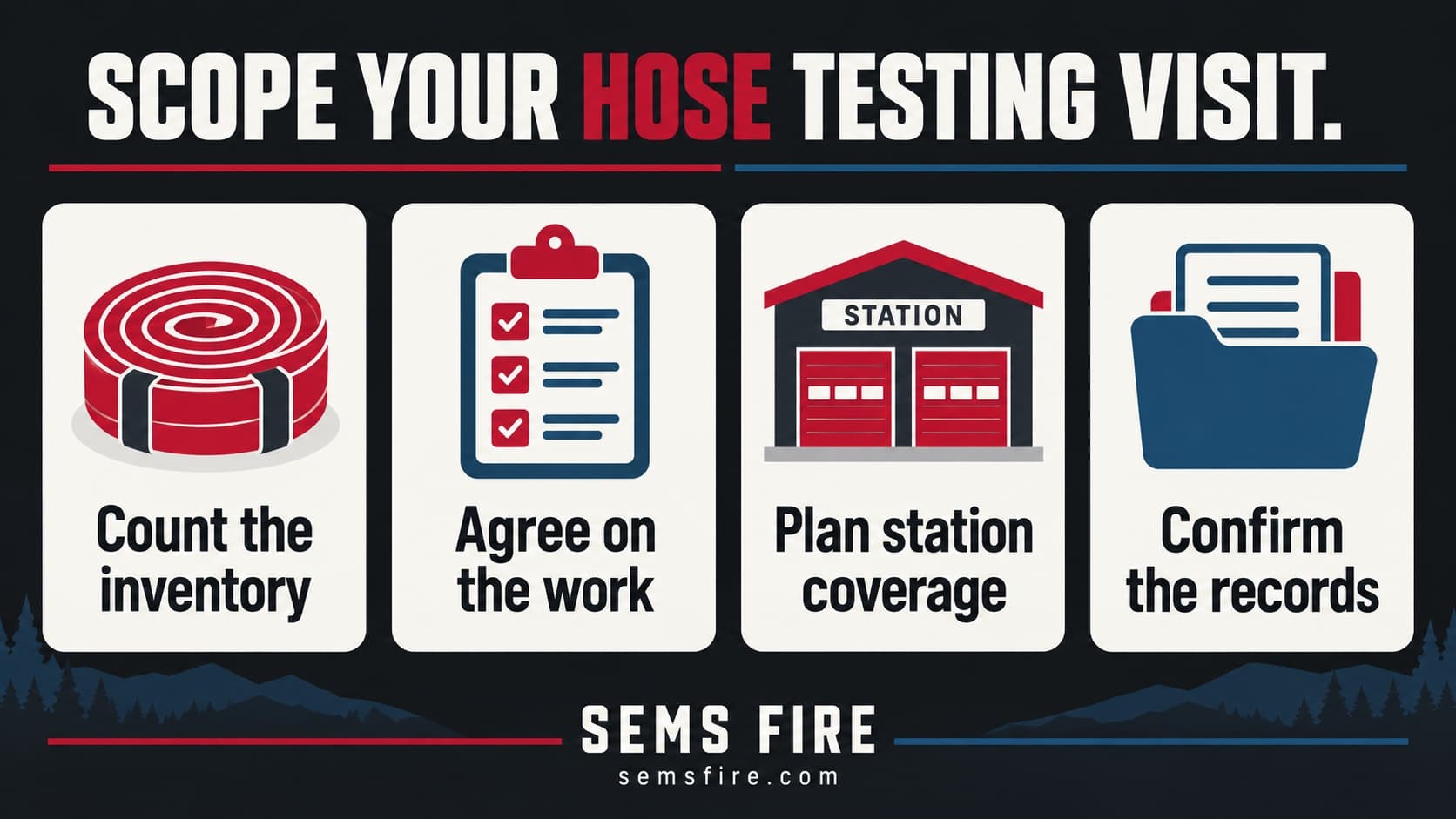
One fire hose testing quote may cover the hose currently loaded on your apparatus. Another may include reserve hose, individual records and additional handling. A lower total does not tell the purchasing officer whether both providers are pricing the same visit.
Before requesting quotes, write down the inventory and the service you expect. It gives providers a clearer starting point and gives the department a fairer way to compare the proposals.
The questions below are for choosing and coordinating a service. The actual inspection and testing belong with qualified personnel using the applicable procedures.
Define the inventory before comparing prices
Start with the hose list your department already maintains. Group it by apparatus and include reserve or stored hose that you want considered. Where available, include individual identifiers, sizes and lengths so the provider can understand the inventory rather than work from an unexplained total.
Flag records that need reconciliation. If the department's list says a section is on one apparatus but the current assignment is uncertain, state that. Do not invent an identifier or a quantity just to make a quote request look complete.
Mention previously repaired hose and existing findings. Ask how the provider wants that information supplied and whether any equipment needs a separate assessment. This allows the proposed scope to distinguish ordinary planned work from a known unresolved concern.
Ask what the quoted service includes
Request a written description of the inspection, testing, handling and reporting included. Confirm which standard and edition apply to the proposed work and how the provider addresses manufacturer guidance and the department's requirements.
Ask how additional inventory discovered on the day will be handled. Will the department need to authorize an amended quantity or separate work? Identify the person who can approve that change before the crew arrives.
SEMS's fire hose testing service includes inspection, testing and documentation. Use the quote to confirm the exact inventory and visit arrangements for your department rather than assuming every possible task is included.
Put apparatus handling in the scope
The testing visit affects equipment that crews expect to find in familiar places. Explain your apparatus assignments and any configuration instructions while planning the work.
Ask who records the existing hose arrangements and how questions are resolved. SEMS's published service includes reloading hose in the department's existing configurations. Confirm the details for your apparatus and name a department contact who can clarify an unfamiliar arrangement.
Also discuss stored equipment that is not on an apparatus. The provider should know where it is and whether it belongs in the quote. A reserve inventory in another building can be easy to miss if everyone assumes the apparatus beds are the complete scope.
For a broader description of the service visit, see our on-site hose testing article. This checklist helps you define the purchasing and coordination decisions around it.
Let the provider specify site needs
Share the station location, access restrictions and available department contact. Ask the provider to confirm what site arrangements are required for the proposed work. Do not build a testing layout or conduct a preliminary pressure test to prepare for a quote.
The department remains responsible for planning its operational coverage and approving apparatus availability. Discuss those constraints early so the provider can explain what scheduling arrangements may be possible. Do not assume every apparatus can be worked on together or that the visit will take a fixed number of hours.
If you want ground ladder testing considered during the same visit, include the ladder inventory in the original inquiry. The office can then confirm whether a combined scope and suitable schedule are available.
Confirm how results and findings are delivered
Ask for a sample report with other customers' information removed. Check whether the result can be matched to each piece of equipment in your inventory and whether the date, scope and findings are clear.
Agree who will receive the report and who will track any open items. Discuss how a failed or otherwise questioned section is identified and how the department is informed. The handling should follow the applicable procedures rather than an improvised decision made when the station is busy.
Clarify what happens if further assessment, repair or replacement is recommended. Those items may require a separate quotation and authorization. Keep the service result and the purchasing decision connected in the record without treating them as the same thing.
Compare the scope line by line
Before selecting a provider, check each proposal against the inventory, handling arrangements, reporting and exclusions. Resolve differences in writing. Ask about pricing assumptions and how authorized extra work will be documented.
This gives the department a clearer explanation for its purchasing decision and fewer unresolved questions on the day. It does not require choosing the longest proposal; it requires understanding what the quoted price buys.
Send SEMS your hose inventory and department location, with existing findings and scheduling constraints. Mention any ground ladders you want included so the office can assess the full request and prepare the appropriate quote.
Related service: Fire Hose Testing