
Scene Lighting, Upfitting, and Vinyl Graphics: What to Decide Before the Apparatus Comes In
By Jason White, Owner · · 6 min read
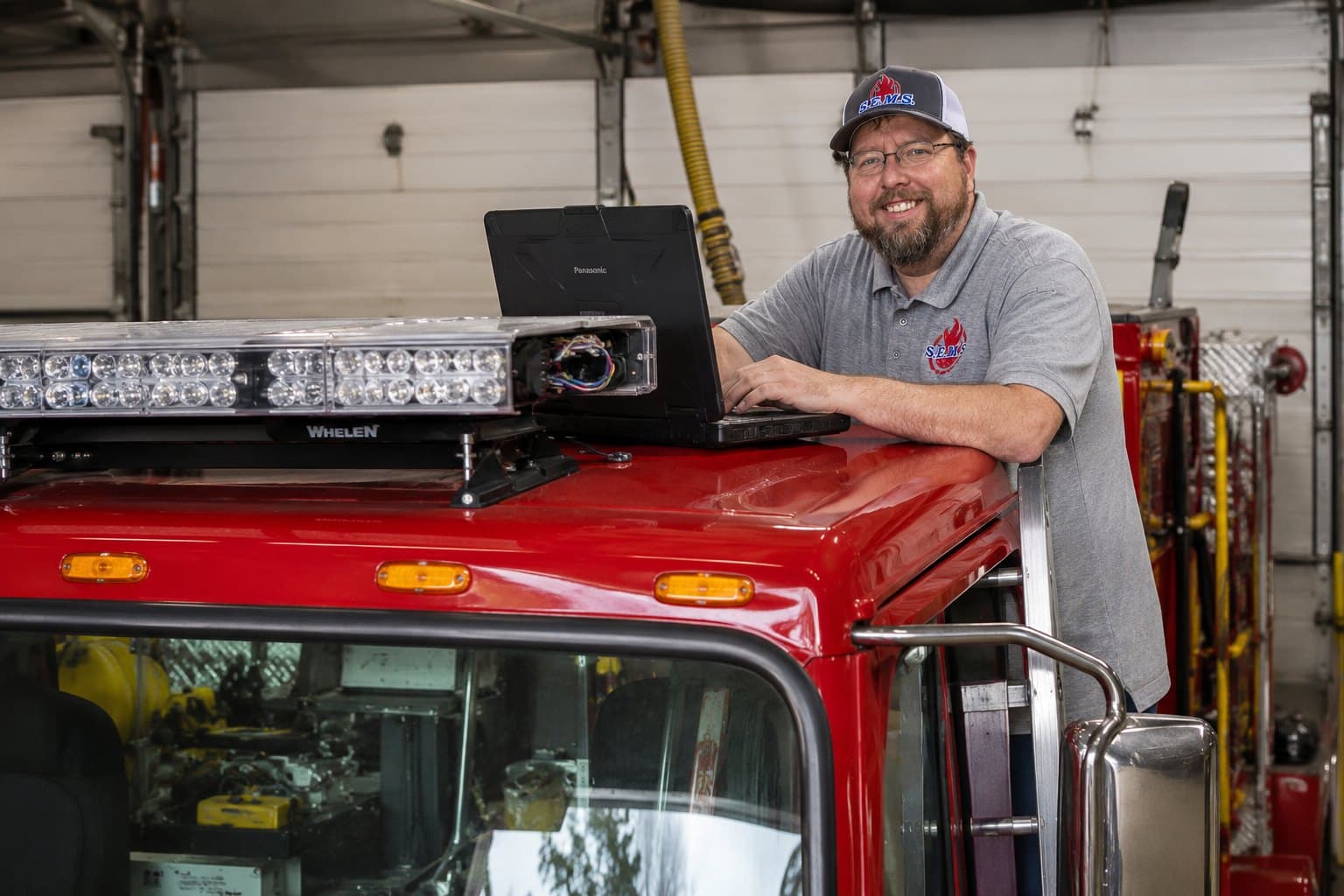
An apparatus gets seen before it gets heard. On a dark county road with a wreck across both lanes, the warning lights are what keep a passing driver from becoming a second incident, and the scene lights are what let the crew see the patient, the tools, and each other. Then there is the lettering on the door, which is how the community knows whose apparatus it is.
We handle all three: emergency lighting, complete vehicle upfitting, and vinyl graphics. We are an authorized Feniex Lighting and Command Light dealer, and our graphics work is done in house by Melissa Wasden, our vinyl and graphic specialist. This article is about the decisions a department should make before the apparatus comes in, because those decisions are what separate a clean install from an apparatus that goes back to the bay twice.
Lighting: two jobs, two sets of decisions
Warning lighting and scene lighting do different work, and departments sometimes plan one and forget the other.
Warning lighting
Warning lights exist so that other drivers see the apparatus. The decisions:
- Where the apparatus works. A department that runs highway incidents needs full rear and side warning coverage and a traffic advisor. A department that mostly runs structure fires in town can weigh cab and upper-level coverage more heavily.
- What is already on the apparatus. Older rotators and halogen bars draw a lot of current and fail often. Replacing them with LED usually lowers the electrical load while improving visibility, but the wiring and switching often need work at the same time.
- How it is switched. One master switch, a cab console, a panel at the pump. Decide who turns what on and from where, and tell us. Switch layout is the thing crews complain about most after an install that was not planned.
Scene lighting
Scene lighting exists so the crew can see. Our own post on September 2, 2026 put it simply: when firefighters arrive on scene, visibility can make all the difference. The decisions:
- Light tower or mounted scene lights, or both. A telescoping light tower from Command Light floods a whole scene from above and is the right answer for extrication and large incidents. Mounted scene lights on the body and cab cover the work areas around the apparatus and are always on when it is. Many engines carry both.
- Power. Scene lighting draws from the apparatus electrical system or a generator. The alternator, batteries, and existing loads decide what can be added. This is the calculation we do first, because adding lights a system cannot carry is how a department ends up with a dead apparatus at a scene.
- Mounting. Brow lights, side-mounted floods, telescoping poles at the rear. Where the crew works around the apparatus decides where the light goes.
Upfitting: the apparatus as a workplace
A complete upfit turns a chassis into a working emergency vehicle. It covers siren and controller, radio installation, consoles, mounting for tools and equipment, storage, and the power distribution behind all of it. We do this work on fire apparatus, rescues, brush trucks, utility units, and law enforcement vehicles.
The decisions here are about people. Who sits where, what they need to reach without unbuckling, what has to be charged on the apparatus, and what has to come off it at every scene. Bring the crew that rides it into the planning, not just the officer who orders it.
Vinyl graphics: visibility, identity, legibility
Graphics do three things, in this order.
- Visibility. Reflective striping is what makes the apparatus visible when the lights are off or the driver is looking at a different part of the apparatus. The NFPA apparatus standard has required retroreflective striping along the sides and front of new apparatus, and chevron striping across the rear, for years. Older apparatus can be brought up to the same layout with reflective vinyl, and it is one of the safety upgrades that does the most for an older apparatus.
- Identity. Department name, unit number, and the seal or logo. Melissa designs lettering and layouts that carry the department's look across the whole fleet so an engine and a brush truck read as the same department.
- Legibility. A unit number a dispatcher or a mutual aid officer can read from across a scene, at night. Size, contrast, and placement decide it, and a wrap that looks impressive in the bay can be unreadable at fifty feet.
Graphics jobs run from a single unit number to a full wrap. Lighting upgrades and upfits are larger and are scheduled as projects, so plan ahead.
What to decide before you call
- Which apparatus, and what is on it now. Photos of every side, the cab interior, the pump panel, and the existing switch layout.
- What you want it to do. Highway warning coverage, scene illumination for extrication, a new siren and radio, new lettering, reflective striping, a full wrap. Say all of it, even if you plan to phase it.
- The department's artwork. Your seal or logo as a vector file if you have one. If all you have is a patch or a photo, Melissa can redraw it, and it is better to know that up front.
- The color scheme and any standard you follow. Some departments have a documented fleet scheme. If you do not, this is a good time to set one, and we will build it with you.
- Power and electrical history. Recent alternator or battery problems, and any electrical work done by someone else.
- Board or council approval. Lighting and graphics are visible purchases and the board often wants to see the design. We provide a layout for approval before anything is cut or mounted.
- Timing. New apparatus delivery date, a parade, a rating review, or a grant spending deadline. Tell us what the date is and we will tell you straight whether it is workable.
How the job runs
We assess the apparatus, agree the scope with you, and quote it. Graphics get a design proof for approval. Lighting and upfit work gets a layout and a load calculation. Then the work is scheduled as a project, and Lynn confirms the dates. When it is done, the apparatus leaves with documentation of what was installed and where, so the next technician who opens the panel knows what they are looking at.
Questions we get
Can you do lettering only, without a wrap?
Yes. Most of our graphics work is lettering, unit numbers, and striping, not full wraps.
Do you install lighting from other manufacturers?
We are a Feniex and Command Light dealer and we know those products well. If your department is standardized on something else, ask. We will tell you what we can support.
Can you bring an older engine up to the current striping layout?
Yes. Reflective side striping and rear chevrons can be added to existing apparatus with reflective vinyl.
Send us the photos
Send a photo of the apparatus and a note about what you want on it. Call the office at (251) 282-0958 or send a message with the photos attached, and Lynn will follow up to set the assessment.
Related service: Lighting Upgrades, Vehicle Upfitting & Vinyl Graphics