
Fire Hose Testing Records: What to Keep for Every Length
By SEMS Fire · · 4 min read
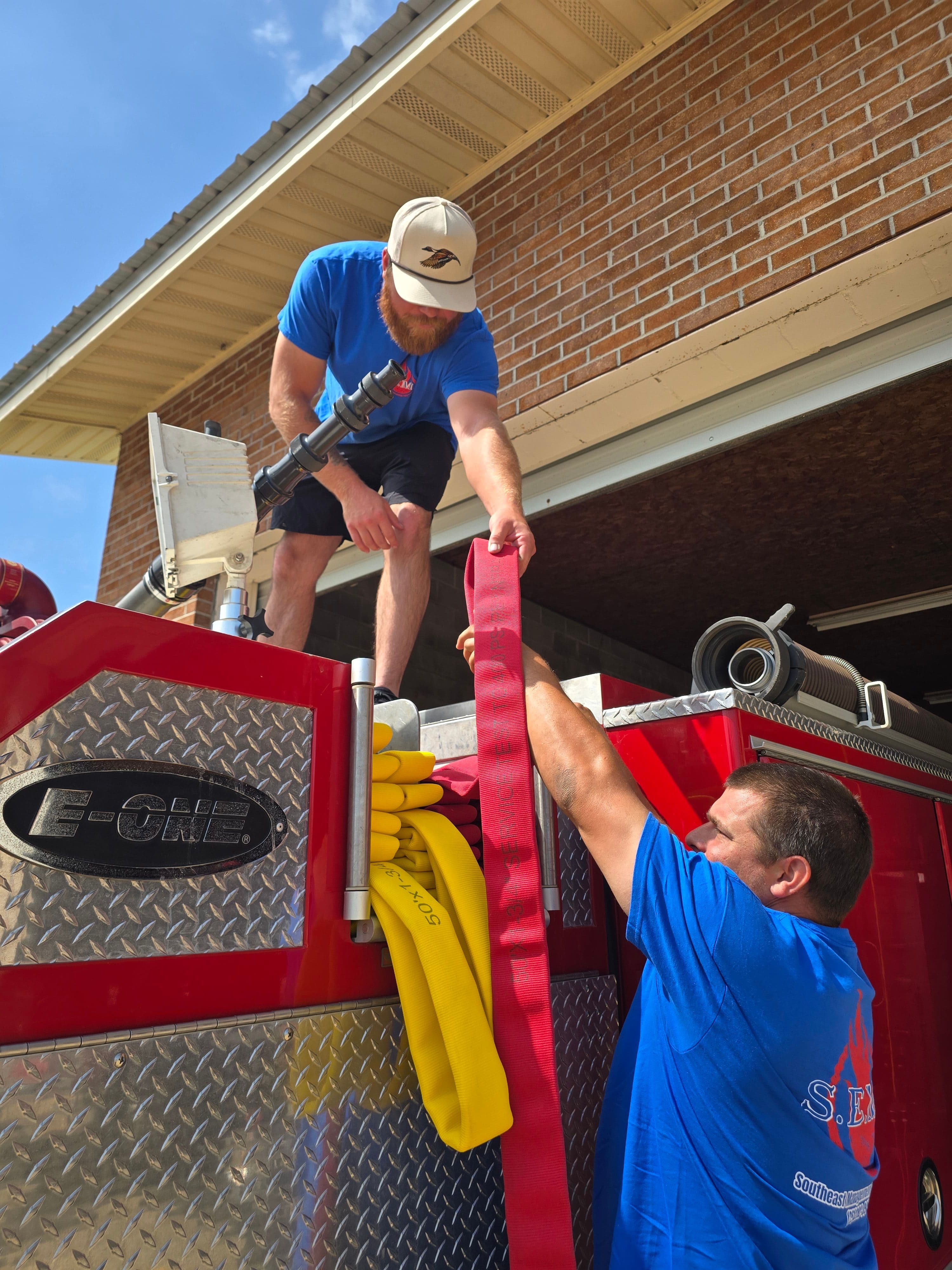
A total hose count can help plan a testing visit. It cannot explain what happened to a particular length. A usable hose record connects the same length to its inspection and test history, repairs and final disposition without losing that identity when it moves between apparatus.
SEMS lists inspection, testing and documentation for hose sections on its services page. The framework below helps a department organize those records. It is an administrative recommendation, not a reproduction of mandatory NFPA record fields or retention periods.
Give each length a stable identity
Use an identifier that lets the department and testing provider connect the physical length to its record. Record the department's ID alongside any manufacturer serial or other existing identifier. Moving hose to another truck should not erase its earlier history.
Ask your provider how existing IDs will appear on the test report and how unreadable or duplicate IDs will be handled. Follow the manufacturer's and department's approved marking method; this guide does not recommend modifying or marking hose with an unverified product.
Build the inventory and event history separately
The inventory describes the length. The event history describes what happened to it. A practical file might include:
| Inventory information | Event information | | --- | --- | | Department ID and manufacturer identification where available | Inspection or test date | | Diameter, length, type and coupling information | Provider, report reference and recorded result | | Documented purchase or in-service information | Repair, concern or other disposition | | Current assigned location and status | Follow-up owner and supporting document |
Use the fields required by your adopted standard and policy, adding practical information when helpful. Do not treat an estimated purchase date as a known manufacturing date.
Attach the actual report
Link the inventory row to the original test documentation, not just a typed “passed” entry. That preserves the provider's recorded result, identity and any recommendations. The department should confirm that every expected length can be reconciled to the report or an explained exception.
The live on-site hose testing guide explains the broader visit. This article is about the record that stays useful afterward, not the testing procedure or pressure settings.
If an ID is missing, a record is duplicated or a result is unclear, resolve that with the provider instead of copying last year's status forward.
Keep failures, repairs and status changes attached
When a concern is identified, record the reported finding, the action taken under department procedures and who is responsible for follow-up. Keep failed-test or repair documentation with the same hose identity even if the length later moves, is repaired or is removed from the active inventory.
A repair invoice alone should not be treated as authorization to return hose to service. The department needs to establish the inspection, testing and approval requirements that apply before a status changes. This article does not authorize use of damaged or failed hose.
Preserve the reason for retirement
When a length is removed, record when, why and how the disposition was handled under department policy. Retain the historical entry rather than deleting it to make the active list look cleaner. A separate inactive view can keep the working inventory readable without discarding its history.
Retirement history can also explain a replacement request: which size or type needs replenishing and what documented event created the need. Use the documented history to explain the need, rather than extrapolating an unsupported failure rate or service life.
Confirm standards and retention with the department
NFPA's 1930 catalog covers fire-service equipment including fire hose. Existing department documents may refer to NFPA 1962. Confirm the document, edition and record requirements actually adopted by your organization rather than assuming the newest catalog listing automatically governs.
There is no single retention period established by this administrative checklist. Align retention and access with applicable requirements and department policy, and preserve records through a system change or officer handover.
Do we need a separate spreadsheet for each length?
Not necessarily. One inventory with linked event records can work. What matters is retrieving the correct length's complete history.
Can SEMS add or replace IDs?
Ask the office what identification work is included or can be scoped. Do not assume that your preferred marking method is part of every quote.
Who owns corrections?
Assign an inventory owner, and keep the original report with any documented correction. Quietly overwriting a result makes the history harder to audit.
Organize the next testing request
Send SEMS your hose inventory and available records to discuss testing documentation and quote scope.
Related service: Fire Hose Testing